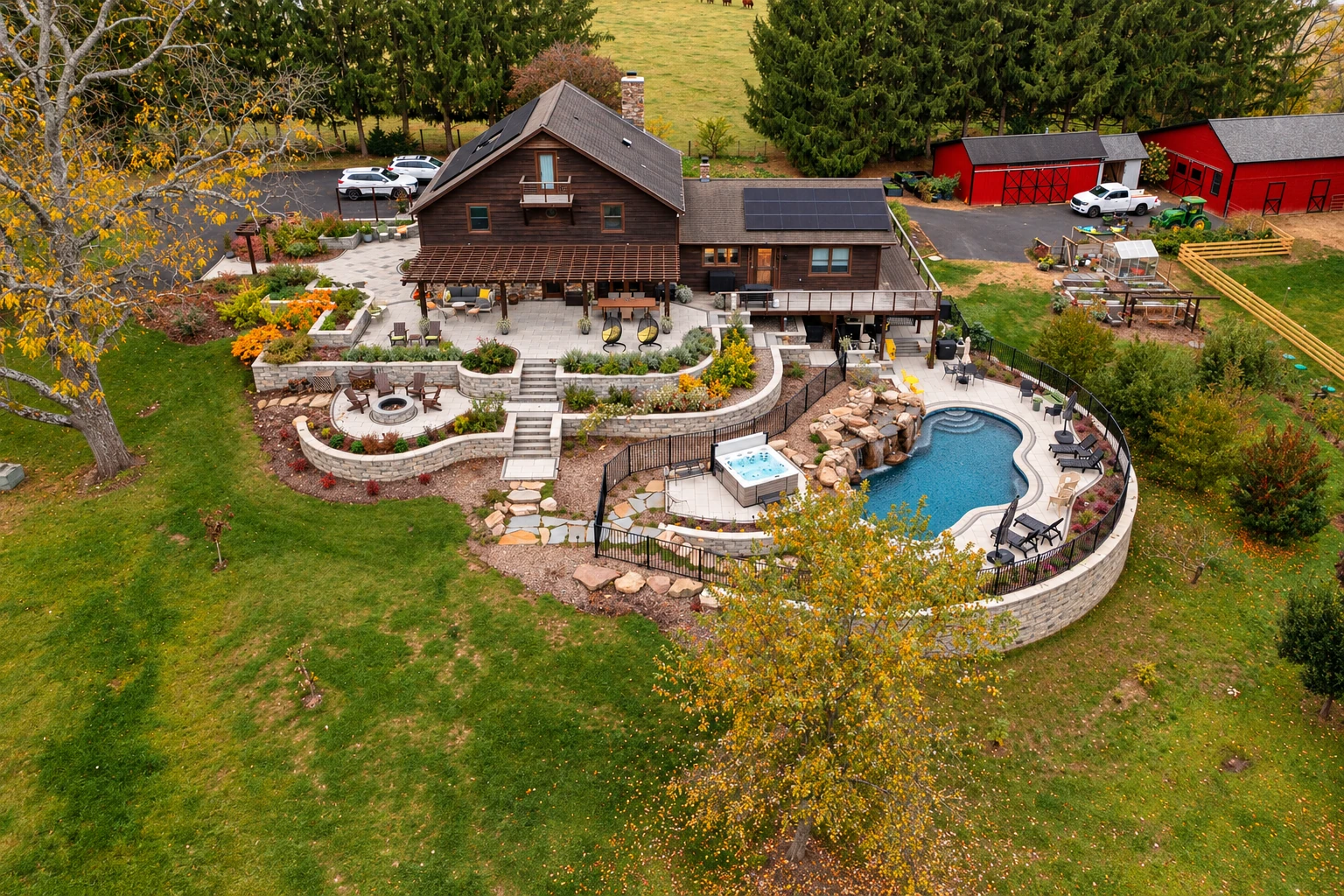
Retaining wall construction in Vacaville CA - a wall that stays standing
Yard slumping toward the patio or an old wall leaning? We build retaining walls that hold the slope and drain the water behind them.
- Licensed and insured.
- Free on-site estimates.
- Expect a reply within 1 business day.
What does it take to build a retaining wall in Vacaville?
The short answer: Retaining wall construction in Vacaville means digging a trench down to firm ground, building a block, stone or concrete wall on it and giving the water behind it somewhere to go, so a sloped yard stops creeping toward your patio or house.
Most people call because the hill out back comes down a little more every winter, or an old wall has started to lean. The price mostly follows how long and how tall the wall is, what it's built from and how much digging the base needs once we're into the ground. The schedule turns on the weather, the size of the wall and whether the city wants a permit, which we take care of if it does. If you only want a low wall for looks and not to hold back dirt, that's more of a brick wall job. Your estimate puts your own wall on paper.
How do you know your yard needs a retaining wall?
Mud on the patio
After a good rain you find dirt on the patio or running down the driveway. Usually the slope above has nothing holding it, so the water carries soil down with it. Every winter you wait, you lose more of the slope and the wall you need gets bigger.
Old wall tipping forward
A timber or railroad tie wall is leaning out, or the boards are soft and rotting. That's usually wood near the end of its life, or wet soil with no drainage pushing on it from behind. Once it lets go, you're paying to clean up the slope as well as build the new wall.
Bulging or cracked block
A block wall has a belly in it or cracks stepping across the joints. Most of the time that's water trapped behind it or a weak base underneath, and patching the crack won't stop it. I check the base and the drainage first, and if the wall only needs minor work, I'll tell you that.
How our retaining wall construction works
The part of a retaining wall that holds the slope is the base and the drainage behind it, so that's where we start, and I'd rather spend the effort there than on the face you see. We dig the trench down to firm ground and check the bottom before anything goes on it. If the bottom turns out to be heavy clay, wet soil or ground somebody dug up before, one block maker's guide says to take it out and replace it with compacted granular fill, which is crushed rock packed down hard. So on that kind of lot, plan on extra digging. Then we lay the drainage, build the wall up course by course, backfill behind it and clean up.
Some calls turn out not to need a new wall at all. If your old stone or brick wall still stands straight and is only worn at the joints, masonry restoration is usually the smaller job, and I'll say so. If the new wall is making a flat spot for the backyard, we also do fireplace installation, so the two can be planned together.
Interlocking block wall
Interlocking concrete block suits most backyard slopes, from a low garden step to a taller wall. Taller or reinforced block walls get a drain pipe behind them, and a block wall built and kept up properly has no set limit on how long it lasts.
Stone or boulder wall
Natural stone or boulders suit a yard where you want the wall to look like part of the landscape. Like block, a masonry wall built on a firm base and drained properly can last as long as you own the house.
Poured concrete wall
A poured concrete wall suits a tight spot or a cut close to the house or driveway, where you want a clean, solid face. It needs the same firm base and drainage behind it, and it isn't a wall you'll be planning to rebuild.
What happens after you call about a retaining wall in Vacaville?
Here's how a retaining wall job runs with us, from your first call to the day we walk the finished wall together. Most of the deciding happens at the visit, once I've seen the slope.
- Step 01
Call or send the form
Call (707) 452-3329 or send the form with the wall's rough length and height, and we'll get back to you to set up a visit. Photos of the slope and a note on any wet or clay ground help me come ready.
- Step 02
I come out and look
I come out myself, look at the slope and where the water runs, and tell you straight what I'd fix now and what can wait. I write down what I saw and what I'd do about it, so you have something to compare against.
- Step 03
We permit, dig and build
If you go ahead, we take care of any permit the job needs and set up the inspections. Then we dig to firm ground, build the wall and backfill it, and a wet spell can push the digging back.
- Step 04
Clean up and walk it
We clean up and walk the finished wall with you before we call it done. I'll show you where the water comes out so you know what to keep clear.
Retaining wall construction and permits in Vacaville
In Vacaville, the city's Building Division reviews and inspects all new construction and improvements to existing structures inside city limits, and it takes permit applications online. Whether your wall needs a permit, and what rules apply to it, is the Building Division's call, so that's who to ask about your project. We check with the Building Division early, handle the application and set up the inspections, and I'll tell you up front if your wall is one of those jobs.
Around here we see a lot of backyards cut into a slope and old tie walls starting to tip, and the fix is usually the same, a solid base and somewhere for the water to go. We build that way on jobs in Fairfield and Davis too.
Book a free on-site look at your retaining wall
We get back to you within one business day to set a time, and then I come out myself to look at the slope and tell you what I'd do. The estimate is free, and there's no obligation to go ahead.
Why Vacaville homeowners call Brickline Vacaville Concrete and Masonry
I check the trench myself
I come out to look at every job myself, and I work alongside the crew that builds it. If you're comparing contractors, ask each one how they'll check that the trench bottom is firm before the wall goes up, because on our jobs I'm the one standing in it.
Learned it fixing rushed walls
We've been in business since 2017, and before that I spent years patching block walls and brick steps for a property management company. Fixing other people's shortcuts is why the base and drainage get our effort, even though you won't see them.
Licensed and insured in California
We're licensed and insured. Work in Vacaville is held to California's building rules plus the city's own changes, which the Building Division enforces, and we build to them.
On a retaining wall, what matters most is what's under it and behind it. Tell us about your slope or call (707) 452-3329, and I'll come take a look.
Retaining wall questions from Vacaville homeowners
How much does a retaining wall cost in Vacaville?
Retaining wall construction in nearby Sacramento usually costs about $20 to $60 per square foot of wall face, which is the side you see, measured length by height. That's the going rate in the area, not our price, and the material moves it most, from wood and railroad ties to interlocking block, concrete, stone or boulders. I'll price your own wall when I come out to look.
Which retaining wall material lasts the longest?
Masonry and concrete walls have no set limit on how long they last when they're built and kept up properly, while timber walls can last up to 40 years. With wood you're planning on a rebuild someday. If you want the wall that outlasts it, I'd lean toward block, stone or concrete.
Does my retaining wall need a drain pipe?
One block maker's guide says a drain pipe is required for any reinforced wall, for gravity walls over 4 feet tall and for sites with poor drainage. A reinforced wall has layers of grid fabric tied back into the soil, and a gravity wall holds the slope with its own weight. The pipe runs low along the back of the trench and comes out to daylight, so if your wall is tall or your yard stays soggy, expect it in the plan.
How long does it take to build a retaining wall?
It mostly comes down to the wall's length and height, how much digging the base needs and whether the city has to review it first. Before anyone digs, underground utilities get marked through the 8-1-1 Call Before You Dig service, which takes a few days, so that call goes on the calendar early. I'll talk timing with you when I'm out to look at the slope.
How do I maintain a retaining wall?
Keep the weep holes, the small openings near the bottom that let water out, clear so the wall can drain, and look it over now and then for shifting, bulging or cracks. Pull plants growing on or right next to the wall and fill in any erosion around its base. If you spot a bulge, call us before it gets worse.
What causes a retaining wall to fail?
Most walls that fail had a weak base or water trapped behind them, not bad block. Soft ground under the first course lets the wall settle and tip, and water with no way out pushes the whole thing forward. When we're called to a failed wall, I find out which it was before we rebuild, so the new one doesn't go the same way.
Other masonry work that pairs with a wall
Masonry restoration
If you have an older stone or brick wall that's still standing straight, restoring its joints and loose pieces can cost less than tearing it out and rebuilding.
Fireplace installation
Once a wall gives you a flat terrace, it's a natural spot for a fireplace, and planning both together keeps the footing and drainage from fighting each other.
Send us photos of your slope
Call (707) 452-3329 or send the form with a few photos taken after a rain, because seeing where the water runs tells me more about the wall you need than a dry slope does.